
Storm Damage Roof Repair: What Homeowners Should Know
Jul 27, 2026Florida weather doesn’t mess around. Your roof gets hammered with torrential downpours, 100 mph wind gusts, and hail storms where the rains literally drown out palm fronds every single year. In some cases, the damage is so obvious but unfortunately most of the time severe weather brings with it silent destruction that goes undetected until water begins to leak through your drywall. Your home is where you live, and when it has incurred damage quickly contracting storm damage roof repair will ensure minor water intrusion does not escalate into serious structural rot costing thousands in repairs.
Key Insights for Property Owners
- Things That Are Hard to See: When wind drives rain beneath easily lifted shingles, your plywood deck can rot long before any stains appear on the ceiling.
- Escalation in the Speed of Things: A single improperly sealed roof flashing may threaten your insulation, internal framing and electrical systems within weeks.
- The insurer must expedite efforts to mitigate, and without such significant damage reporting soon after the storm may end in partial payouts.
- Commercial Restoration: Specialized contractors visualize the status of underlayment, decking boards and ventilation equipment to guarantee total system protection.
What Causes Severe Weather Damage to Your Roofing System?
Florida storms do the most structural damage through roof-system blowing winds, heavy rain a lot of hail and windborne debris. Wind uplift removes seal tabs from asphalt shingles; serious hail fractures rigid tile underlayment. But when severe weather strikes your neighborhood, immediate mitigation takes moisture trapped in the framework and wrecks any structural roof trusses or interior frame.
Common Signs of Roof Vulnerability
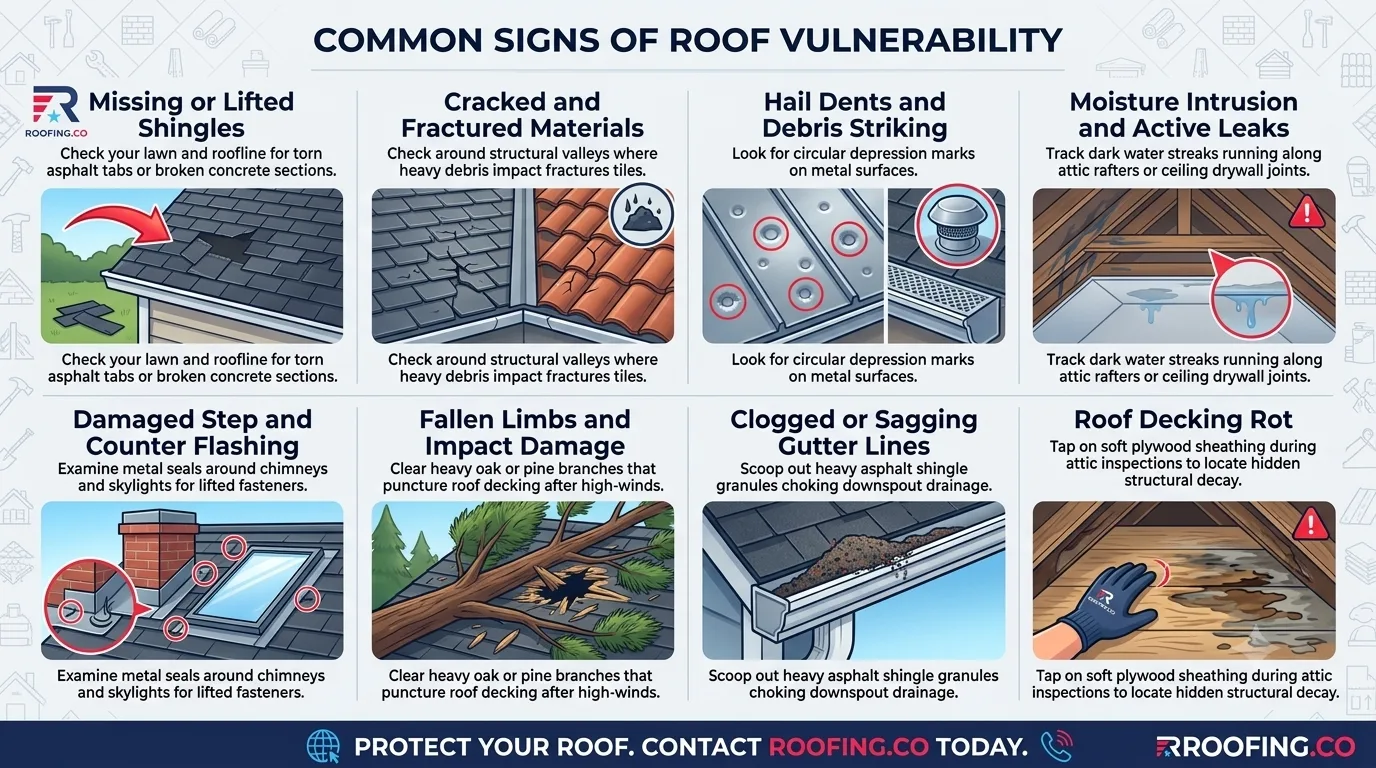
- Missing or Lifted Shingles: Inspect your lawn and roofline for torn asphalt tabs or broken concrete tile sections.
- Cracked and Fractured Materials: Check around structural valleys where heavy debris impact usually fractures brittle slate or clay tiles.
- Hail Dents and Debris Striking: Look for circular depression marks on metal flashing, vent caps, and gutter guards.
- Moisture Intrusion and Active Leaks: Track dark water streaks running along attic rafters or ceiling drywall joints indoors.
- Damaged Step and Counter Flashing: Examine metal seals around chimneys, skylights, and plumbing stacks for lifted fasteners.
- Fallen Limbs and Impact Damage: Clear heavy oak or pine branches that puncture roof decking during high-wind events.
- Clogged or Sagging Gutter Lines: Scoop out heavy accumulations of asphalt shingle granules that choke off downspout drainage.
- Roof Decking Rot: Tap on soft plywood sheathing during attic inspections to locate hidden structural decay caused by humidity.
PROTECT YOUR ROOF TODAY
In a hurry? Call us at 727-309-3344
How Can You Tell If Your Roof Needs Immediate Restoration?
Detect Storm Damage in your Grounds Faded shingle tabs, excessive granule runoff on gutters and soft spots whenever you look up at an inside ceiling can all indicate storm damage. Florida’s baking heat will cook trapped moisture and transform a tiny pinhole leak into full-fledged mold blooms within 48 hours. If you see debris lying on your roofline, stay safe on the ground and get experts licensed to inspect roofs for it immediately.
Why Should You Never Delay Post-Storm Repairs?
Routine roof leaks cause destructive wood rot, toxic mold growth that are killing people here in Austin including the highly controversial styrofoam insulation of today and catastrophic structural frame failure. Breezeways in your roof decking suck humid air into the attic and keep the air conditioner running round-the-clock, increasing electricity bills. For starters, scheduling an expert evaluation for storm damage roof repair immediately after a large hurricane or summer storm protects your equity and also keeps the property protected.
What Steps Should You Take Immediately After a Severe Storm?
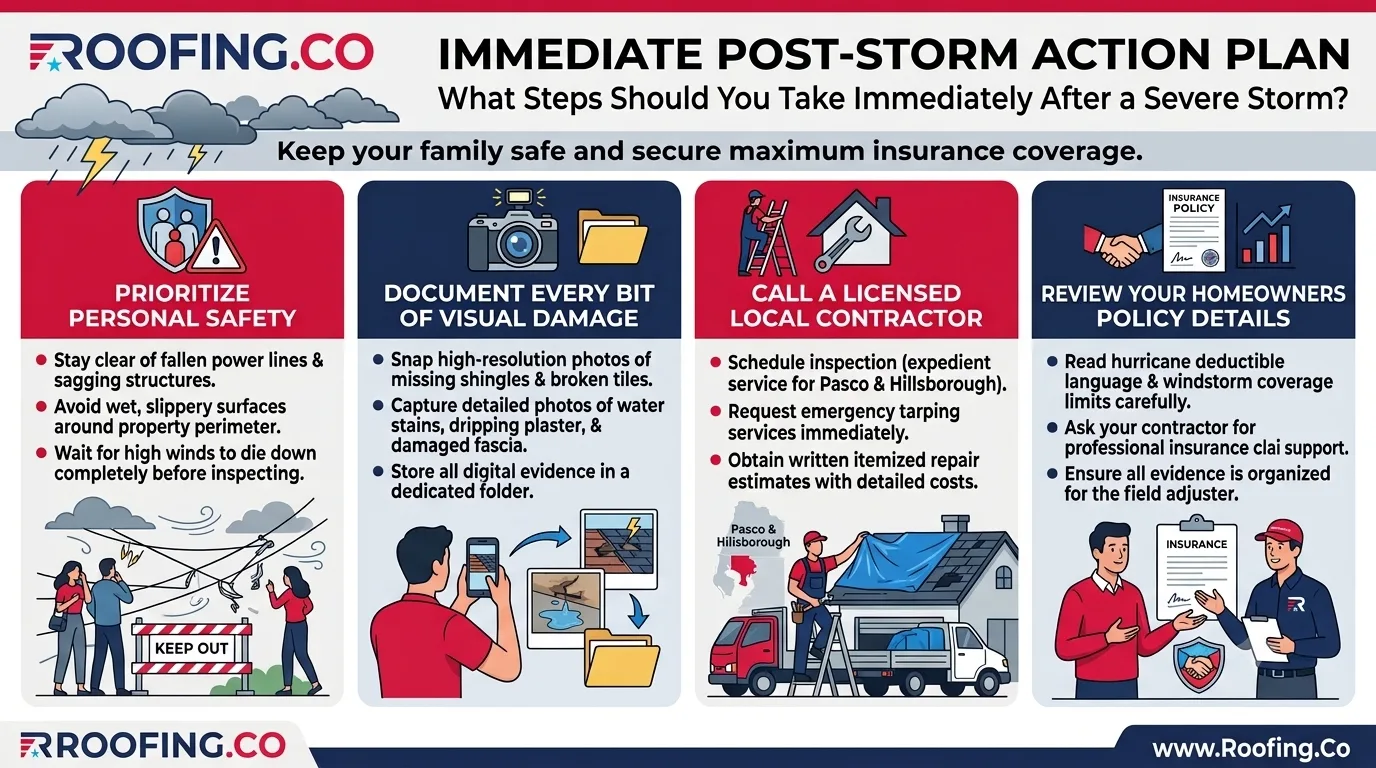
Following a clear action plan keeps your family safe and helps secure maximum coverage on your insurance claim.
- Prioritize Personal Safety
- Stay clear of fallen power lines, sagging roof structures, and wet slippery surfaces around your property perimeter.
- Avoid stepping onto steep pitch roofs or wet metal panels after torrential rain storms pass through.
- Wait for all high winds to die down completely before stepping outside to inspect structural surroundings.
- Document Every Bit of Visual Damage
- Snap clear high-resolution photos of missing shingle courses, broken tiles, and fallen tree branches on your property.
- Capture detailed photos of water stains, dripping ceiling plaster, damaged fascia boards, and dented gutter lines.
- Store all digital evidence in a dedicated folder to present directly to your insurance field adjuster.
- Call a Licensed Local Contractor
- Schedule a comprehensive inspection with an experienced team that understands localized Pasco and Hillsborough storm impacts.
- Request emergency tarping services to block wind-driven rain while your formal insurance claim processes.
- Obtain written itemized repair estimates that detail accurate material costs and local labor rates.
- Review Your Homeowners Policy Details
- Read through your hurricane deductible language and windstorm endorsement coverage limits carefully.
- Ask your contractor for professional insurance claim support to streamline line-item negotiations with your carrier.
PROTECT YOUR ROOF TODAY
In a hurry? Call us at 727-309-3344
How Do Professional Repairs Prevent Long-Term Property Destruction?
Contractors don’t just nail down new shingles; they restore your entire roof system from the plywood deck up to ensure total weatherproofing.
Complete Structural Defense
- Inspect underlayment layers to catch hidden synthetic felt tears before rain hits.
- Re-seal counter flashing joints around brick chimneys using high-grade elastomeric sealant.
- Secure loose drip edge metal along eaves to block wind-driven water intrusion.
Systems and Material Care
- Replace missing architectural shingles using exact factory color matches and high-wind nail patterns.
- Clear clogged valley flashing to maintain uninterrupted water drainage during afternoon downpours.
- Fasten loose ridge cap tiles using specialized heavy-duty roofing adhesive compounds.
Investment Protection
- Install temporary waterproof tarps over exposed plywood decks during active insurance claims.
- Provide detailed documentation to clear carrier contingencies and retain full home resale value.
Comparing Quick Patches versus Professional Roof Restoration
| Feature | Temporary Quick Patch | Comprehensive Professional Repair |
| Primary Focus | Emergency leak stops | Permanent structural restoration |
| Workmanship Warranty | None or short-term | Full multi-year leak-free guarantee |
| Underlayment Assessment | Skipped completely | Thorough tear-off and deck inspection |
| Insurance Claim Acceptance | Rarely accepted as full repair | Accepted by major insurance carriers |
| Wind Resistance Rating | Low (temporary adhesive) | High (meets Florida Building Code) |
Vital Roofing Components Every Homeowner Should Know
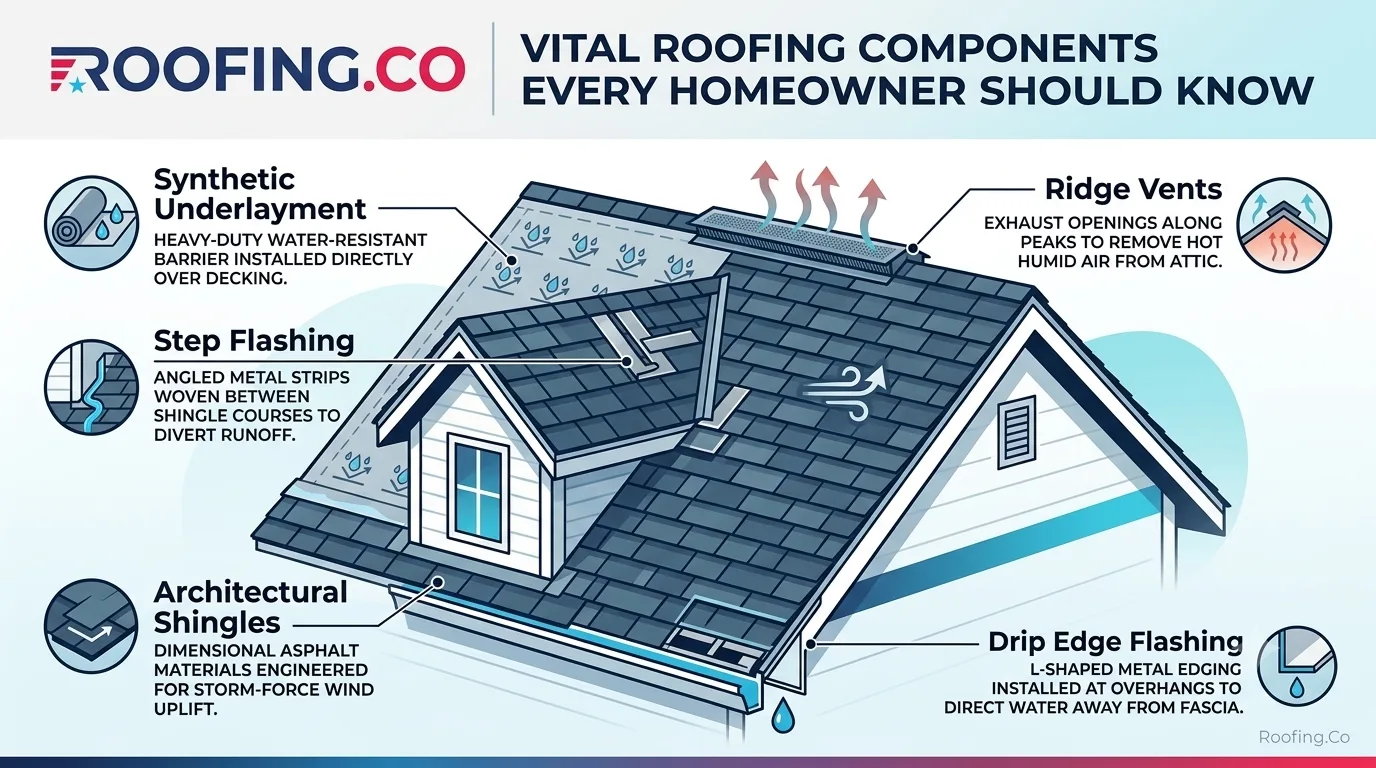
- Synthetic Underlayment: A rugged, waterproof barrier that is installed directly over structural plywood roof decking.
- Step Flashing (also called step flashing) are angled metal strips that weave in and out between shingle courses at vertical wall intersections to help direct water runoff.
- Architectural Shingles: Also called dimensional asphalt roofing products, these items are manufactured to resist permitted levels of wind uplift driven by tropical storms.
- Ridge Vents – Openings at Roof Peaks to Remove Hot Humid Air from Your Attic Space.
- Metal drip edge flashing (L-shaped metal at roof overhangs to divert water off the fascia boards)
PROTECT YOUR ROOF TODAY
In a hurry? Call us at 727-309-3344
Real-World Homeowner Insight: The Danger of Hidden Moisture
Here is what most storm chasers won’t tell you: an asphalt shingle can look completely normal from your driveway while the underlying wood sheathing is soaking up water like a sponge. When 70 mph winds lift a shingle tab, water gets forced backward under the seal strip. If your contractor doesn’t pull back those shingles during an inspection, that trapped moisture will rot your plywood deck from the inside out, leading to expensive structural failure during the next storm season.
Ready to Restore Safety and Security to Your Home?
At Roofing.Co, we provide rapid, reliable restoration services to protect your property against Florida’s toughest weather. From complete attic leak detection and emergency tarping to full insurance claim assistance, our experienced field team restores your roof with precision and care.
Don’t let a minor storm leak turn into an expensive home restoration project. Call Roofing.Co today to schedule your thorough post-storm evaluation and secure dependable storm damage roof repair for your property.
Frequently Asked Questions
Q: How soon should I inspect my roof after a storm passes?
A: You should conduct a ground-level inspection immediately after weather conditions clear up safely. Schedule a professional roof inspection within 48 to 72 hours to identify hidden underlayment tears before indoor water damage occurs.
Q: Does homeowners insurance cover severe weather roof repairs?
A: Most Florida homeowners insurance policies cover sudden storm damage caused by high winds, hail, and fallen tree limbs. Coverage depends on your specific policy terms, hurricane deductibles, and whether you file the claim promptly.
Q: What are the most common signs of hidden storm damage?
A: The most reliable signs include missing shingle tabs, heavy granule buildup in downspouts, interior water ceiling spots, dented metal flashing, and loose gutter channels. Soft spots on your attic ceiling also signal severe leaks.
Q: Can I repair storm damage on my roof myself?
A: Attempting DIY roof repairs after severe weather is dangerous due to wet, unstable surfaces. DIY fixes often fail to seal underlying moisture gaps properly, which can void your manufacturer warranties and lead to denied insurance claims.
Q: How much does post-storm roof restoration typically cost?
A: Repair costs depend on damage severity, material type, roof pitch, and underlying structural plywood rot. Simple shingle replacements cost significantly less than complex structural deck repairs, making early inspections vital for keeping costs down.
Services We Offer
Roofing co. can install any roof with great pride and care, no matter what style or type you prefer.
- Cost-Effective Roof Installation
- Roof Inspection
- HVAC Services
- Spray Foam Insulation
Roofing Co roofing system:
- Asphalt Shingle Roofs
- Metal Roofs
- Flat Roofs
At Roofing co. we understand that roofing services can be a significant investment, which is why we offer competitive pricing and financing options to help make our services more accessible to our customers. Contact us today!
