
Roof Repair Service in St. Petersburg After Hurricane Damage
Aug 10, 2026Hurricanes spare us most everything besides downed power lines and palm fronds strewn about Pinellas County. Strong winds, relentless rains and wind-blown debris compromise residential rooftops in ways that do not always readily display from the driveway. Professional roof repair services in St. Petersburg also help to identify hidden structural problems that can be avoided employing them and even saving you thousands of dollars on framing work or interior repairs as everything from drywall, ceiling tile, paint jobs all roll up into an expensive matter if not handled early enough!
Key Takeaways
- Wind-Uplift Is Responsible for Breaking Adhesive Seals Under Shingles and Not Blowing Them Off the Roof Deck
- Key Risks: Walking on a roof with torn or damaged areas is extreme fall and electrocution hazard for homeowners.
- Water Infiltration: Water that has penetrated the roof can remain in an untreated state, soaking drywall at ceiling level of a room below, attic insulation adjacent to structural members or overhead trusses.
- Repair vs Replace: When the structural decking is still dry and sound after a localized storm event that causes water infiltration, targeted repairs are used to fix only the affected areas.
- Insurance Documentation: As in most Florida homeowners insurance policies, coverage tends to get complicated—specifying the need for documentation of initial roof damage.
What to do after a hurricane: Immediately storm damage response in Safety
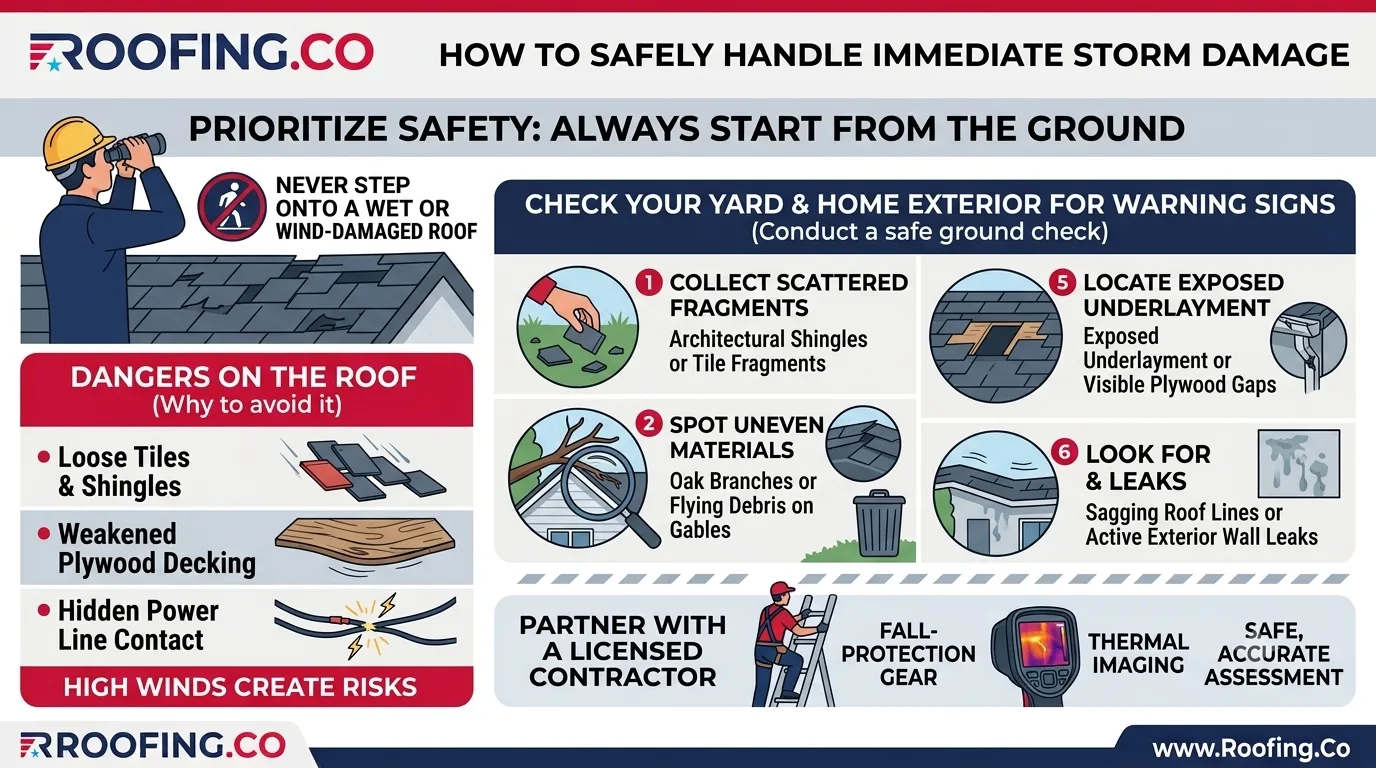
The early post-storm check of the roof should be done from ground level for your safety first. Tornadoes cause the same type of damage – loose roof tiles, weakened plywood decking and concealed points where power lines contact with other wires confirmed over a broad band across storm zones. A licensed roofing contractor has fall-protection equipment and thermal imaging, thus providing a safe yet accurate damage assessment. And the reality on the ground is this: you do not step foot onto a wet or wind-damaged roof structure, ever.
Check your yard and home exterior for these initial warning signs:
- Collect scattered architectural shingles or tile fragments from the lawn.
- Spot uneven, lifted, or creased roofing materials along ridge lines.
- Identify fallen oak branches or flying debris resting on gables.
- Inspect bent aluminum gutters, downspouts, and drip edge flashing.
- Locate exposed underlayment or visible structural plywood gaps.
- Look for sagging roof lines or active exterior wall leaks.
Next, carefully access your attic space with a strong flashlight. Check for these interior indicators:
- Feel around for damp blown-in cellulose or fiberglass insulation batts.
- Trace dark water rings and staining on plywood roof sheathing.
- Catch active water drips using heavy-duty plastic containers.
- Inspect structural wooden rafters for wet surfaces or swelling.
- Detect strong, musty dampness or active mold growth odors.
- Identify visible daylight pinpointing open roof deck penetrations.
If water is still moving into the living areas immediately remove high-value electronics and wooden furniture away from ceiling stain. Put a temporary tarp over any interior possessions, but do not try to provide emergency roof patching on your own in the rain.
PROTECT YOUR ROOF TODAY
In a hurry? Call us at 727-309-3344
Why do Coastal Roofs Suffer Severe Storm Damage?
Uplift forces can be powerful enough to rip strips of adhesive which binds shingles together, or crack rigid roof tiles. High-velocity wind shear can lift edge flashing thus allowing high-rain, driven coastal rain water straight into underlying water barriers. If water makes it behind the underlayment, its effect on structural plywood decking is quick and permanent ceiling damage within a few hours.
Here is the part most contractors won’t tell you: severe roof damage often looks completely invisible from your driveway.
Common storm-related issues across Pinellas County properties include:
- Cracked, broken, or completely detached asphalt shingles.
- Displaced tile roof sections along vulnerable hip and ridge seams.
- Bent, rusted, or loose wall and chimney step flashing.
- Punctures caused by high-velocity windborne tree limbs.
- Deteriorated plumbing boot seals and torn off ridge vents.
- Saturated structural plywood decking sagging under heavy water weight.
How Does a Professional Post-Storm Inspection Prevent Hidden Water Damage?
Professional local roof repair service in St. Petersburg inspections discover hidden water routes before structural mold ruins attic insulation Specialized contractors examine bonds of shingle sealant, integrity of underlayment across the entire roof surface as well as at flashing and pipe boots. Prevent minor shingle lifting from snow in the winter turning into major post-storm structural home repairs when March monsoons sweep through town.
A complete roof system check covers these vital structural zones:
- Evaluate surface roofing materials for micro-fractures and thermal loss.
- Inspect metal valley flashing and step flashing integrity.
- Examine exhaust fans, pipe boots, and attic ridge vents.
- Verify underlayment coverage over exposed roof deck seams.
- Test wooden roof sheathing for hidden rot or moisture pockets.
- Clean clogged aluminum gutters and inspect fascia board connections.
What Urgent Signs Mean Your Home Needs Immediate Professional Repairs?
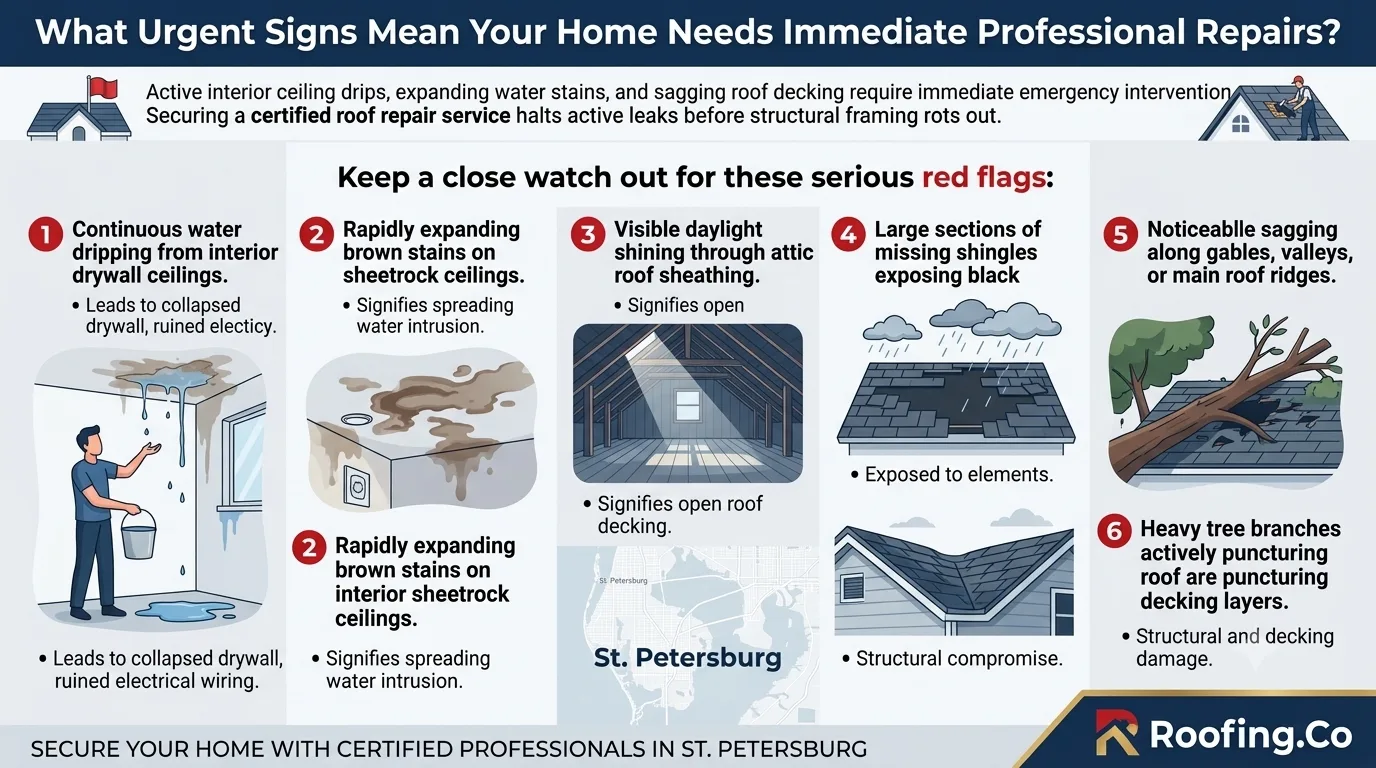
Active drips from ceiling, expanding water stains on ceilings and walls, or sagging roof decking are all emergencies that require immediate response. If you don’t pay it any attention, visible leaking through the ceiling could result by way of collapsed drywall, damaged electrical wiring and black mold growing. St. Petersburg houses used certified roof repair service to help stop active leaks before structural timber framing rots out.
Keep a close watch out for these serious red flags:
- Continuous water dripping from interior drywall ceilings.
- Rapidly expanding brown stains on interior sheetrock ceilings.
- Visible daylight shining through attic roof sheathing.
- Large sections of missing shingles exposing black underlayment.
- Noticeable sagging along gables, valleys, or main roof ridges.
- Heavy tree branches actively puncturing roof decking layers.
PROTECT YOUR ROOF TODAY
In a hurry? Call us at 727-309-3344
How Do You Decide Between Fixing Damage and Replacing Your Entire Roof?
Factors like age and overall condition of the roofing material, as well as total damage incurred when making a choice between targeted roof repair or complete replacement. On a roof that is only slightly above 20 years old, localized repair will work perfectly well so long as storm damage does not exceed greater than one quarter of the total area of building. A very soaked deck or wind-damaged materials indicate a full roof replacement is needed.
The decision boils down to balancing short-term repair budgets against long-term structural protection:
- Minor Surface Repairs: Replacing several missing shingles, resealing pipe boots, or patching small flashing sections saves money on newer roofs.
- Complete Roof Replacement: Replacing worn asphalt roofs over 15 years old avoids endless patch jobs when storm winds destroy broad section seals.
- Florida 25% Rule: State building codes often require full replacement if severe wind damages more than a quarter of the total roof area within a 12-month period.
Step-by-Step Plan for Handling Post-Storm Roof Claims
- Document All External Damage
- Photograph torn shingles, broken tiles, bent flashing, and fallen debris thoroughly from the safety of the ground.
- Record precise dates and severe weather conditions associated with the wind event for insurance adjusters.
- Schedule a Professional Inspection
- Hire a licensed roofing professional to perform a comprehensive moisture evaluation of your roof deck.
- Obtain a detailed, written repair estimate outlining required materials, labor, and local building permits.
- File Your Insurance Claim
- Submit all photographic evidence and professional inspection reports directly to your homeowners insurance carrier.
- Coordinate with the insurance adjuster during their official on-site property damage inspection.
Post-Storm Repair Solutions Tailored for St. Petersburg Homes
Many homeowners in Pinellas County turn to asphalt shingles for a variety of reasons, however residential roofing systems have an incredibly stressful environment all year long. Harsh sun, humidity high levels of salt air and localized downpours in the afternoon create a need for roofing materials tailored to coastal climates.
These targeted solutions protect local homes against severe weather conditions:
Storm-Resistant Upgrades
- Your trained to install architectural shingles that are high wind rated up t0 130 mph hurricane wind gusts.
- Install secondary water barriers over unprotected plywood deck shear walls to prevent wind-driven rain intrusion.
Flashing and Vent Restoration
- Replace corroded galvanized metal flashing with heavy-duty aluminum or copper step flashing.
- Upgrade cracked plastic plumbing boots to high-grade neoprene or stainless steel pipe seals.
Structural Decking Protection
- Swap out water-damaged OSB sheathing with exterior-grade CDX plywood panels.
- Reinforce roof-to-wall truss connections using hurricane straps that meet local building codes.
Traditional Roof Repair vs. Comprehensive Storm Restoration
| Feature / Consideration | Traditional Quick Fix | Comprehensive Storm Restoration |
| Primary Scope | Patching visible shingle gaps | Full decking, flashing, and underlayment overhaul |
| Leak Prevention | Solves immediate interior drips | Protects complete attic structure against future storms |
| Material Quality | Standard off-the-shelf sealants | High-wind rated coastal shingles and synthetic underlayment |
| Structural Warranty | Minimal or short-term coverage | Long-term manufacturer and contractor labor warranties |
| Insurance Compliance | Often misses hidden line items | Fully documented line-item estimates for claim filing |
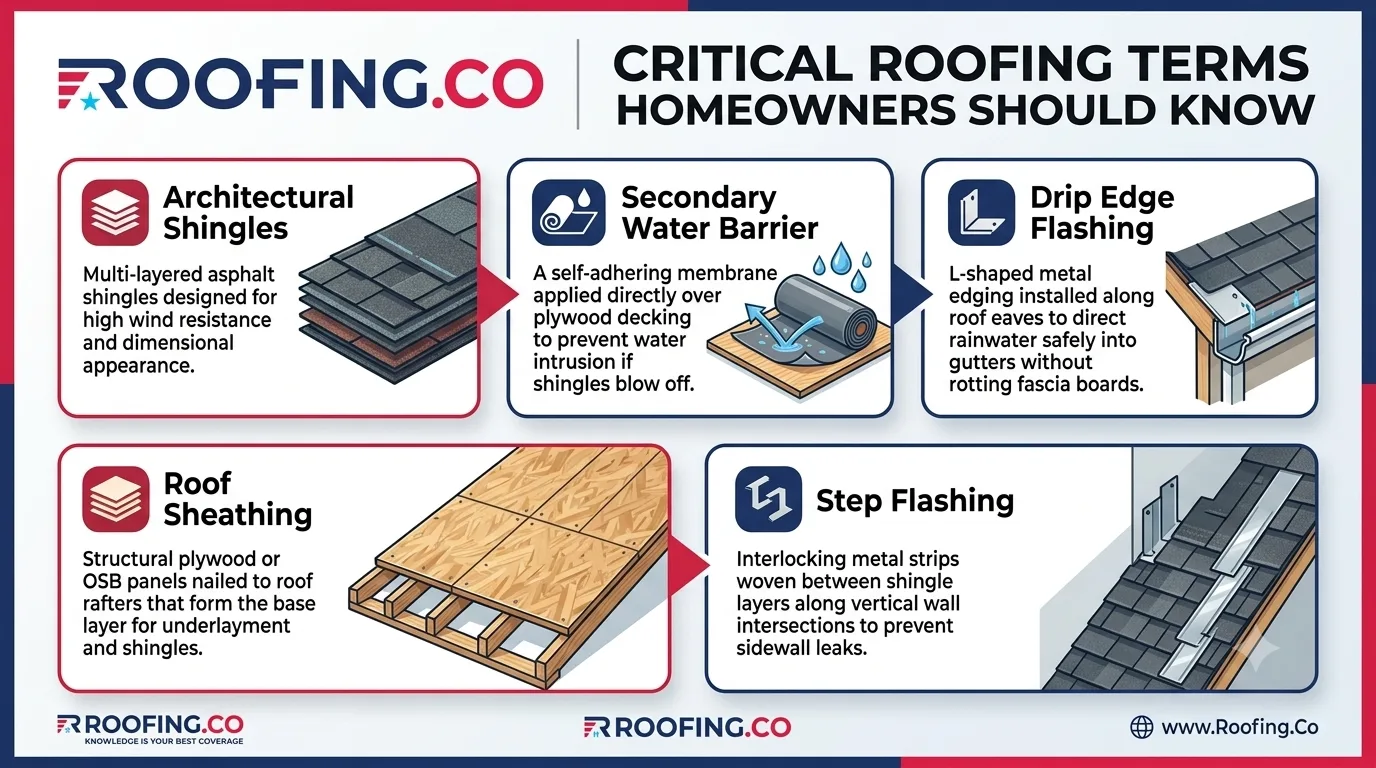
Critical Roofing Terms Homeowners Should Know
- Architectural Shingles: Multi-layered asphalt shingles designed for high wind resistance and dimensional appearance.
- Secondary Water Barrier: A self-adhering membrane applied directly over plywood decking to prevent water intrusion if shingles blow off.
- Drip Edge Flashing: L-shaped metal edging installed along roof eaves to direct rainwater safely into gutters without rotting fascia boards.
- Roof Sheathing: Structural plywood or OSB panels nailed to roof rafters that form the base layer for underlayment and shingles.
- Step Flashing: Interlocking metal strips woven between shingle layers along vertical wall intersections to prevent sidewall leaks.
PROTECT YOUR ROOF TODAY
In a hurry? Call us at 727-309-3344
Homeowner Insight: What Most Contractors Won’t Tell You About Lifted Shingles
“A shingle doesn’t have to be blown off your roof to be completely ruined. Hurricane winds lift shingles up, breaking the factory adhesive seal beneath them and driving fine sand underneath. Even when the shingle lays back down flat, that seal is broken forever. The next standard summer afternoon thunderhead will push water straight up under those unsealed shingles, causing hidden rot in your plywood decking months after the hurricane passed.”
Secure Your St. Petersburg Home Against Future Storm Damage
The strong action you need with local knowhow to protect your property after severe weather. Post-storm repairs that are taken too late bring the risk of saturated insulation, mold hazards and degraded framing timbers. Roofing. Co also offers thorough inspections of damages from storms, transparency in communications and permanent repair solutions that are designed for the coastal Pinellas County weather.
Contact Roofing.Co now to book your full roof damage inspection. Keep your roofing system leak-free with our brand-new tips for roof repair service in St. Petersburg, FL!
Frequently Asked Questions
Q: How soon should I schedule a roof inspection after a hurricane?
A: Book a pro roof check up as quickly because the storm has handed and roads are secure. In this way, Prompt Evaluations identifies hidden failures in seals and saturating decks before afternoon rains destroy interior drywall.
Q: Can a roof leak if no shingles are missing from the roof?
A: Yes, wind shear can also break internal adhesives seals and tent the edge flashing or crack vent boots without lifting a single shingle. These unscreened vents just suck up wind-driven rain during the heavy summer storms.
Q: Should I attempt to repair my storm-damaged roof myself?
A: After the storm don’t DIY roof repair Not in the least because soggy exteriors, deteriorating plywood sheets and concealed energy line threats cause untenable wellbeing pushes that must be dealt with by ensured rooftop experts.
Q: Does every hurricane-damaged roof require a complete replacement?
A: Localized shingle loss or damage to minor flashing almost always can be repaired satisfactorily. A full tear off is warranted when the structural decking has extensive saturation or damage on more than 25% of the surface area.
Q: Will my homeowners insurance cover post-storm roof repairs?
A: Insurance coverage depends on your specific policy terms, hurricane deductibles, and proven cause of damage. Documenting all storm damage immediately with photos and professional inspection reports helps support your claim filing.
Services We Offer
Roofing co. can install any roof with great pride and care, no matter what style or type you prefer.
- Cost-Effective Roof Installation
- Roof Inspection
- HVAC Services
- Spray Foam Insulation
Roofing Co roofing system:
- Asphalt Shingle Roofs
- Metal Roofs
- Flat Roofs
At Roofing co. we understand that roofing services can be a significant investment, which is why we offer competitive pricing and financing options to help make our services more accessible to our customers. Contact us today!
