
Florida Roofing Contractor Tips for First-Time Homeowners
Jul 20, 2026The first signpost of this area requires immediate attention once you purchase your Florida residence. Florida weather pummels homes with extreme solar UV, monsoon rains, high humidity and violent tropical storms. This is because they are experienced in keeping your residential property structurally sound, water-tight, state building codes compliant and safety installations—preferably within Florida.
Key Takeaways
- Code Matters: Florida’s building code requires special structural tie-downs and wind-rated attachments for permanent use.
- Storm Resistant: Knowledgeable contractors construct roofs to withstand high wind uplift pressures and horizontal rain.
- Preventative Maintenance: Minor flashing failures become costly water damage inside the ceiling, but annual professional roof inspections catch these before they do major damage.
- Correct Water Drainage: Well-maintained gutters prevent localised fascia rot, soffit decay and water pooling at the base of an property in heavy afternoon downpours.
- Financial Planning — Start budgeting for maintenance and full replacement now, before the emergency of a storm.
What Makes Florida Roofs Different From Other States?
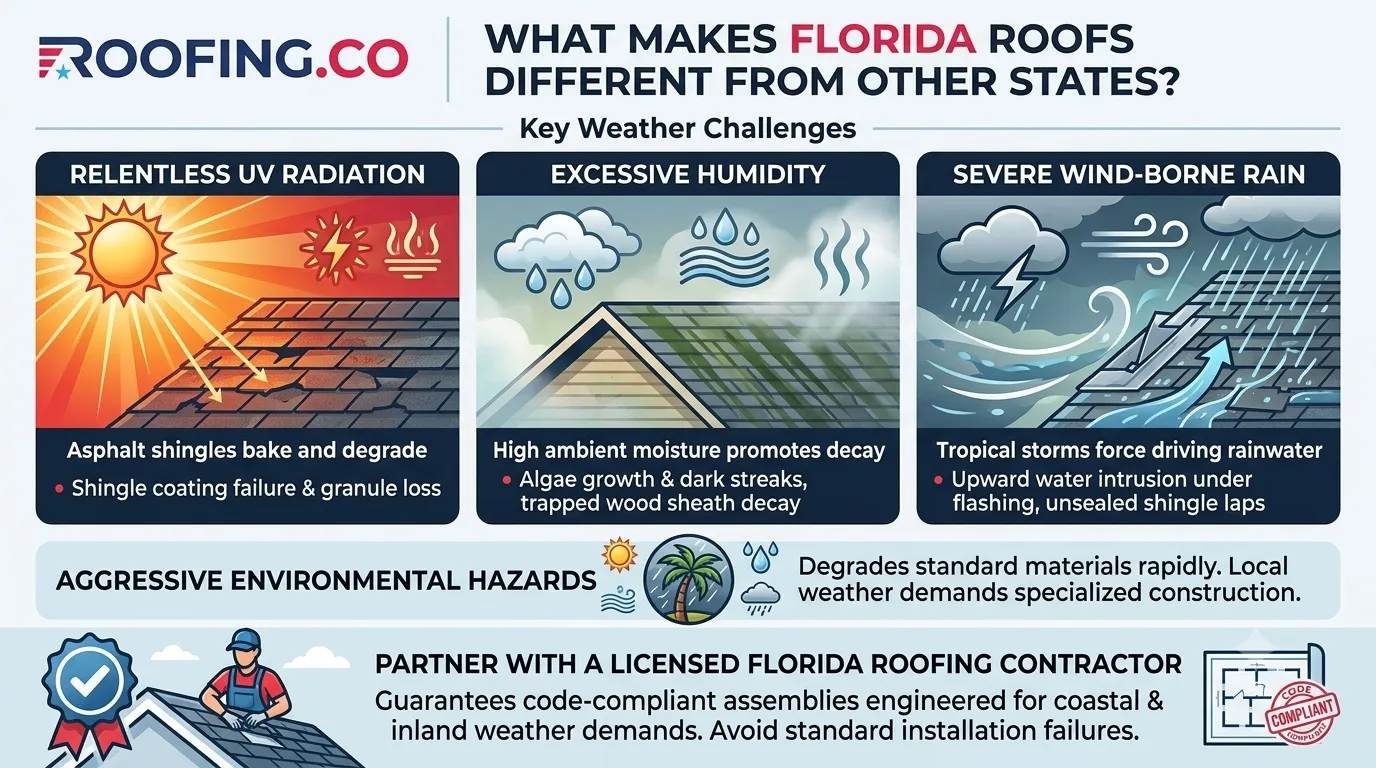
Florida roofs face aggressive environmental hazards, including year-round solar radiation, elevated humidity levels, and intense wind-driven rains during hurricane season. These extreme localized conditions degrade standard building materials rapidly. Partnering with a licensed Florida roofing contractor guarantees that your home utilizes code-compliant assemblies engineered for coastal and inland weather demands.
The reality on the ground is that standard installations fail quickly down here. Local weather patterns demand specialized construction methods.
Key Weather Challenges
- Fierce UV Ignition: Constant solar thermal strips asphalt shingle coatings resulting in overstressed ridges segmented by granule loss over time.
- Humidity: High levels of ambient moisture encourage algae growth and dark streaks, as well as wood sheath decay in some cases.
- Heavy Wind-Driven Rain: Tropical storms lift driving rain up and under poorly installed flashing and unsealed laps in shingles.
PROTECT YOUR ROOF TODAY
In a hurry? Call us at 727-309-3344
What Roofing Materials Work Best for Your Home?
Using high-performing, resilient roofing materials guarantees the most robust weather protection and enhances long-term property values for Florida homeowners. From architectural asphalt shingles to heavy-duty concrete tiles, these materials each provide unique benefits in resistance to wind loads, thermal reflective properties and system life expectancy on roof structures.
Here is the part most contractors won’t tell you: picking the wrong material for your specific roof slope will cost you thousands in premature repairs.
Comprehensive Material Guide
Architectural Asphalt Shingles
- Install cost-effective wind-resistant assemblies designed for standard pitch roofs.
- Select multi-layered dimensional designs that offer easy spot-repairs after minor weather events.
Standing Seam Metal Roofing
- Secure maximum wind uplift protection against severe tropical storms and Category-rated winds.
- Reflect intense radiant solar heat away from the attic to lower summer cooling bills significantly.
Concrete and Clay Tile Systems
- Gain superior structural durability capable of lasting over five decades with proper underlayment care.
- Enhance curb appeal while relying on heavy thermal mass to insulate interior living areas.
Low-Slope and Flat Roofing Systems
- Apply durable self-adhered modified bitumen or single-ply TPO membranes for modern architectural designs.
- Seal seam overlaps tightly to prevent standing water leaks during rapid 4 p.m. Pasco County deluges.
Why You Should Hire a Pro Roofing Contractor
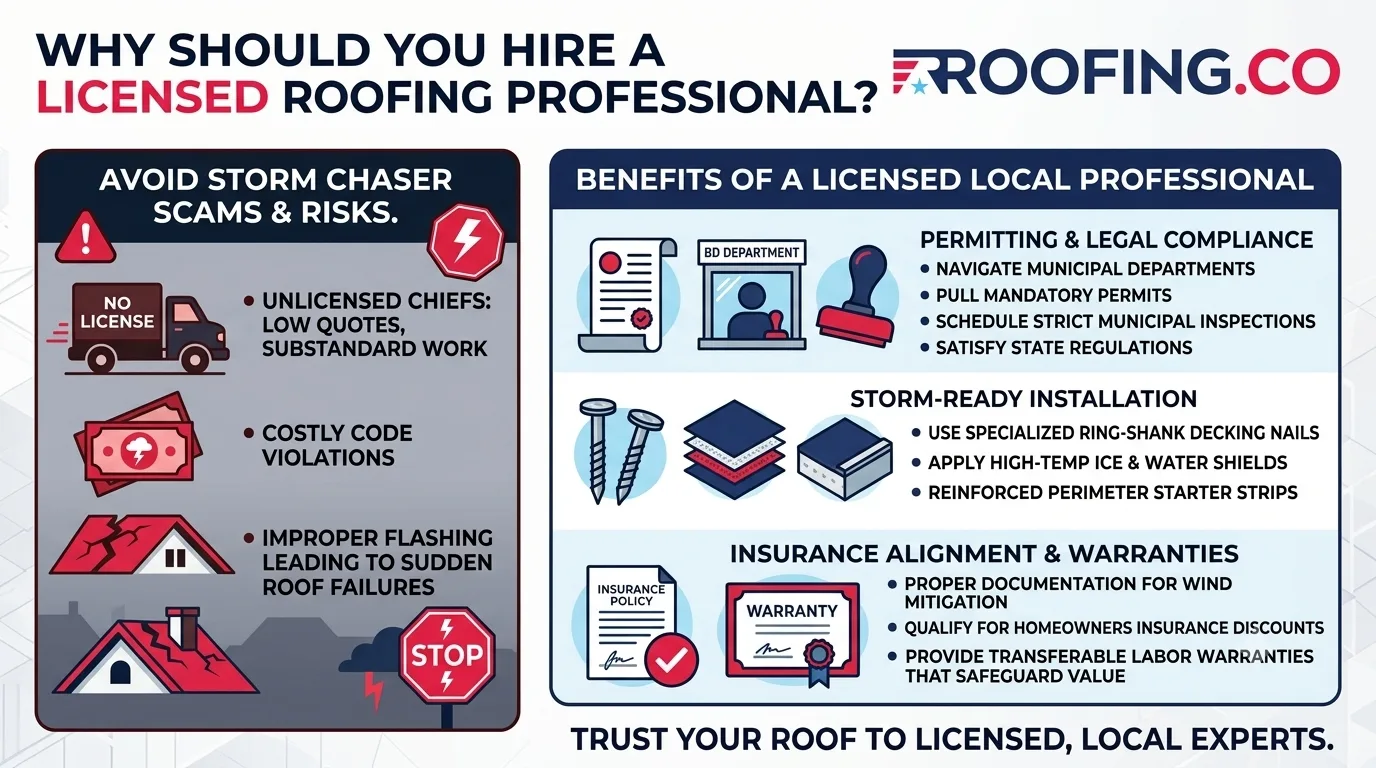
A licensed Florida roofing contractor or insured roofing professional is a good option for inexperienced consumers and protects from common problem of storm-chasers, poor installations and expensive building code violations. Good local residential roofers obtain municipal permits when necessary, follow manufacturer installation requirements and offer transferable labor warranties that protect your home value.
By offering low quotes within days after severe storms, unlicensed storm chasers flood target neighborhoods to do improper flashing work that puts the roof in danger of suddenly failing.
Local Contracting Standards
- Permitting & Legal Compliance: Local contractors work with municipal building departments to secure the necessary permits, schedule required municipal inspections and ensure compliance with state building codes.
- Storm-Ready Installation — Expert, in-house crews install specialty-engineered arrays that include ring-shank decking nails for superior holding power; high-temp ice and water shields designed to withstand the harshest conditions; perimeter starter strips engineered with a reinforced wind flap.
- Know Your Insurance Alignments: With proper documentation, licensing to business wind mitigation inspections can actually qualify homes for essential homeowners insurance premium reductions.
PROTECT YOUR ROOF TODAY
In a hurry? Call us at 727-309-3344
How Does Modern Roofing Technology Compare?
| Feature / Metric | Architectural Shingles | Standing Seam Metal | Concrete / Clay Tile |
| Typical Lifespan | 20–25 Years | 40–70 Years | 50+ Years |
| Wind Resistance Rating | Up to 130 MPH | Up to 160 MPH | Up to 150 MPH |
| Maintenance Level | Moderate (Granules, Shingles) | Low (Fastener Inspections) | Moderate (Underlayment Care) |
| Upfront Investment | Budget-Friendly | Higher Initial Cost | Premium Investment |
Essential Terminology for Homeowners
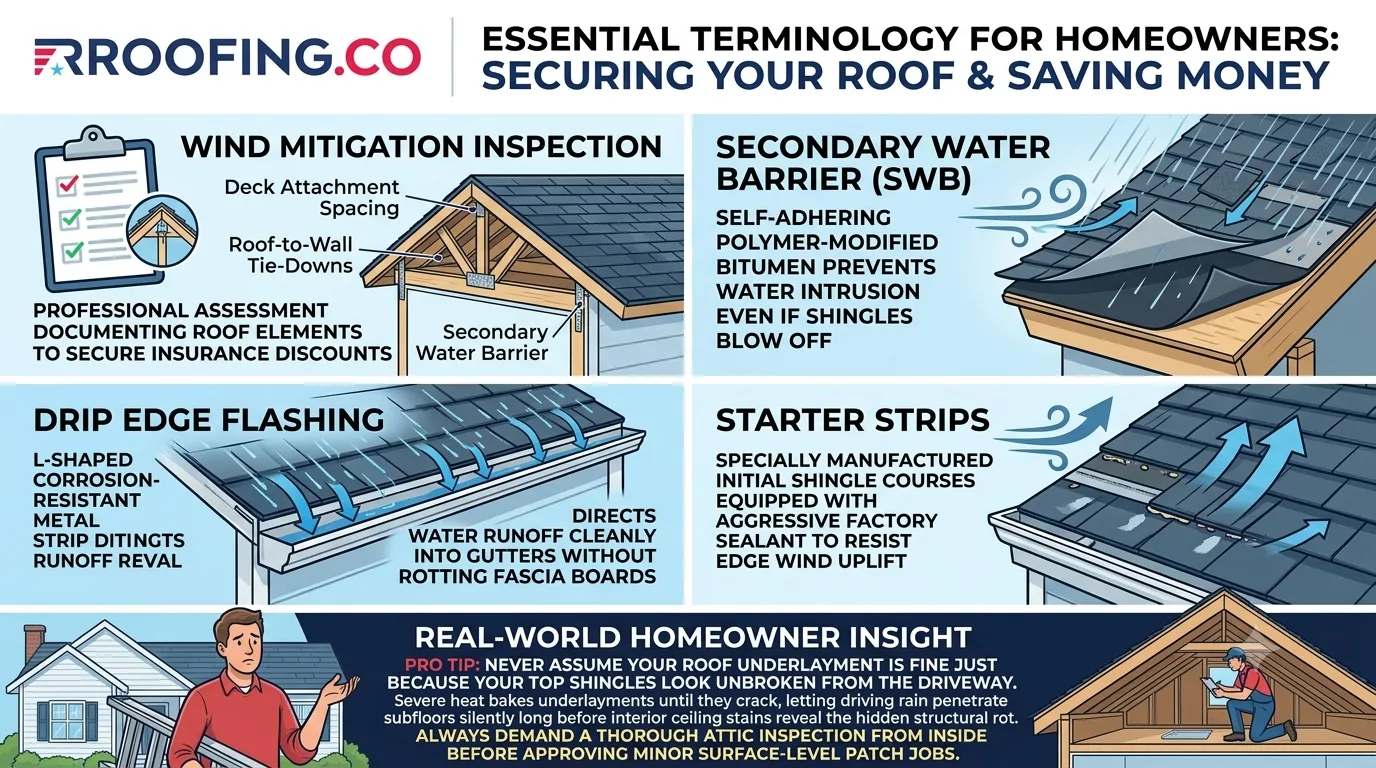
- Wind Mitigation: A professional inspection reporting dimensions, spacing of deck-attachment/roof-to-wall tie-downs and secondary water barriers. All to provide you with insurance credits associated with each individual line item inspected on the report.
- Secondary Water Barrier (SWB): A self-adhering, polymer-modified bitumen underlayment directly bonded to roof sheathing which protects against water intrusion if shingles blow off.
- Drip Edge Flashing: Corrosion resistant metal strip with L-shaped flange, or other types of flashing installed along the edge for rainwater runoff that ensures clean water runs down into gutters without rotting fascias and edges.
- What are Starter Strips: First Tab Shingle Products Installed with Sealant along Eaves and Gables to Improve Resistance to Edge Wind Uplift
Real-World Homeowner Insight
Pro Tip: Never assume your roof underlayment is fine just because your top shingles look unbroken from the driveway. Down here, severe heat bakes underlayment’s until they crack, letting driving rain penetrate subfloors silently long before interior ceiling stains reveal the hidden structural rot. Always demand a thorough attic inspection from inside before approving minor surface-level patch jobs.
PROTECT YOUR ROOF TODAY
In a hurry? Call us at 727-309-3344
Are You Ready To Defend Your Investment with Certainty?
Strong building materials, good maintenance habits and experienced local artisans are essential in protecting your home against the cruelties that Mother Nature can bring. Decisions on structure made today will protect your family while insuring the real estate equity that may accrue without a predictable climate future.
At Roofing.Co We offer friendly roof inspections for first-time buyers, professional storm damage repairs and long-lasting roof replacements suited weather conditions. It’s our trademark to use code-compliant materials and proven installation techniques that will ensure your roof remains strong for years. Call today to get in touch with a Florida roofing contractor and set up your roof inspection.
Frequently Asked Questions
Q: How do I choose the best contractor for my project?
A: Verify active state licensing, confirm comprehensive liability insurance, read local customer feedback, and demand written estimates detailing materials, permits, and transferable warranty protection before signing agreements.
Q: What roofing material lasts the longest down here?
A: Tile and standing seam metal systems last forty to seventy years when installed with high-temperature polymer underlayments and stainless steel mechanical fasteners.
Q: How often should I get my roof inspected?
A: Schedule a comprehensive professional inspection at least once per year and immediately after major tropical storms or hurricane events pass over your area.
Q: Can hurricane damage be prevented completely?
A: While no system is completely immune to Category-5 winds, installing code-compliant hurricane-rated shingles, secondary water barriers, and reinforced drip edges dramatically lowers structural failure risks.
Q: Are professional roof inspections worth the expense?
A: Yes, paying for professional inspections catches minor boot degradation, loose flashing, and small leaks early, saving homeowners thousands in emergency structural frame repairs down the road.
Services We Offer
Roofing co. can install any roof with great pride and care, no matter what style or type you prefer.
- Cost-Effective Roof Installation
- Roof Inspection
- HVAC Services
- Spray Foam Insulation
Roofing Co roofing system:
- Asphalt Shingle Roofs
- Metal Roofs
- Flat Roofs
At Roofing co. we understand that roofing services can be a significant investment, which is why we offer competitive pricing and financing options to help make our services more accessible to our customers. Contact us today!
